The Initial Vision
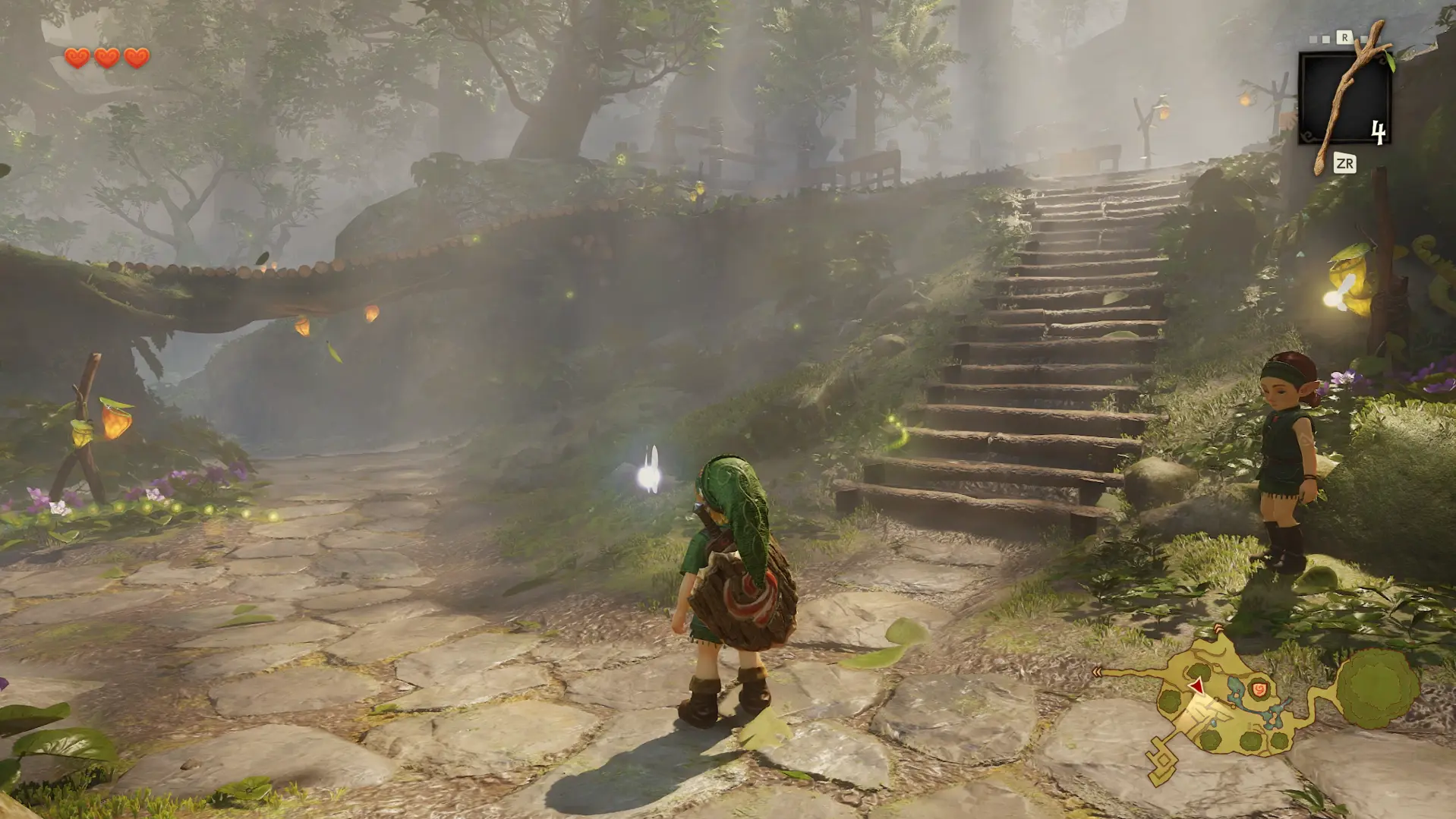
During the Nintendo Direct celebrating 40 years of The Legend of Zelda franchise, we were treated to a fifteen-minute video showcasing the remake of the acclaimed game Ocarina of Time, featuring some comments from Eiji Aonuma. This gameplay, guided by the producer himself, initially shows Link in Kokiri Forest, where we can glimpse a well-crafted environment with photorealistic terrain and a bit more contrast. We see Navi alongside Link, as well as green creatures flying around. The lush vegetation has a tangible look with a variety of plants, along with details like plants illuminated from within, highlighting what could be the village lanterns at dusk.
Upon examining the finer details, we notice a Kokiri near Link with her fairy beside her in a yellowish hue, different from Navi, who retains her bluish tone. It's worth noting that the crops, the fairies, and even the characters exhibit micromovements to create a sense of fluidity and more life in the environment.
We also see parts of the HUD in the corners of the screen: in the upper left corner, we have Link's hearts displayed traditionally as in the entire franchise. In the lower right corner, we find the complete map of the area, showing an overhead view of the location along with a red arrow indicating where Link is on the map and where he is looking, as well as a shaded area indicating the direction the camera is facing, ensuring greater accessibility for the player to avoid getting lost. Finally, in the upper right corner, there’s the visual of the selected item, the action button, and the button to activate the swap interface, which later appears in the video similarly to Zelda: Breath of the Wild.
The houses have a unique look, each distinct from one another, making it easier to navigate between the buildings and aiding in identification. All of this maintains fidelity and a nostalgic atmosphere in relation to the original game.
The Menu
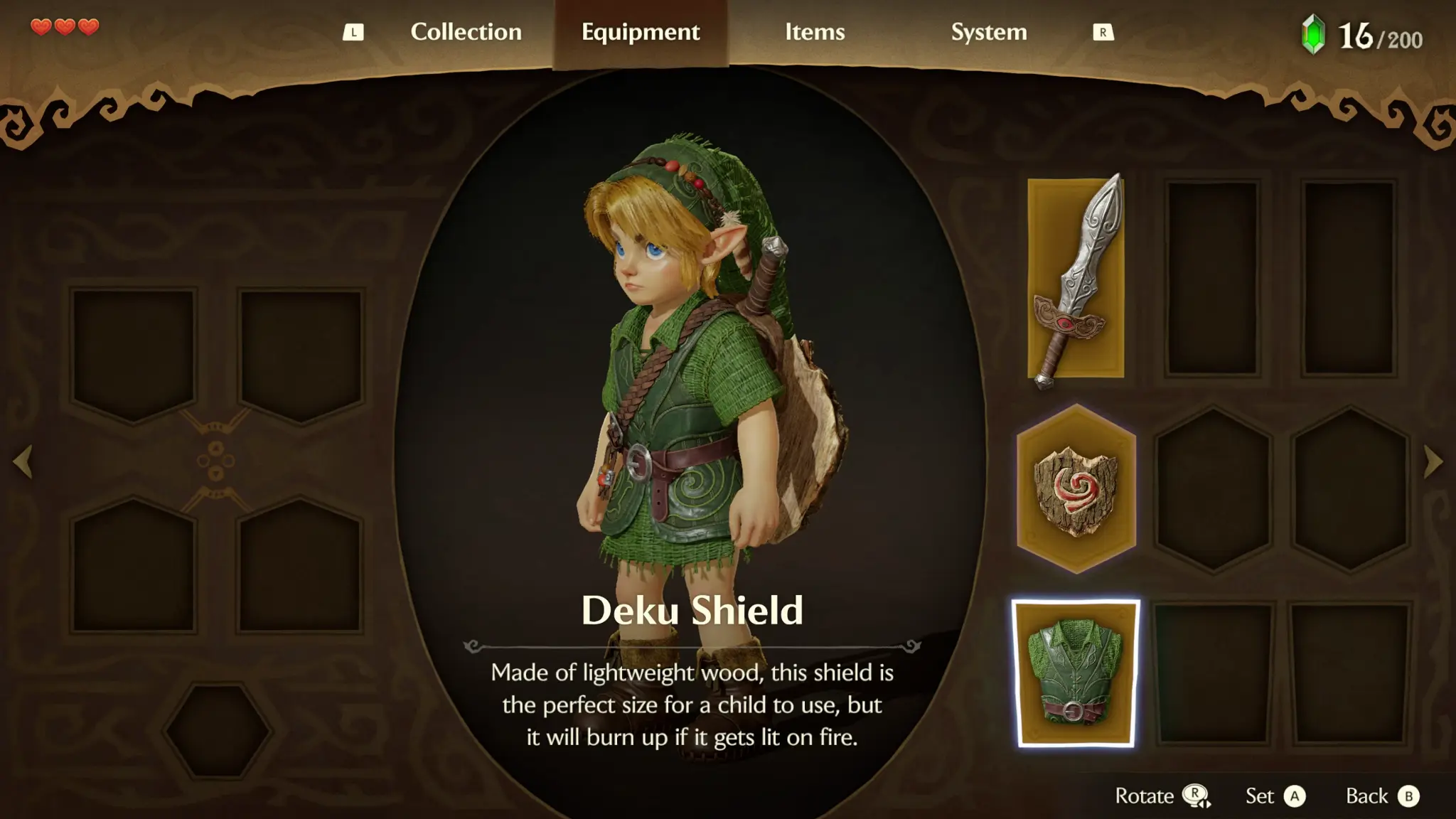
Upon opening the HUD, we can see various options. Still keeping the hearts in view, we have a tabbed menu in English: "Collection," "Equipment," "Items," and "System," which can be navigated using the "L" and "R" buttons, also visually identified. In the upper right corner, where the selected item used to be during gameplay, we now see the rupees and the size of your pouch. In the lower right corner, we have the commands for the right analog stick: "R" for Rotate, "A" for Select, and "B" for Back.
Moving away from the edges, the most striking feature in the center of the screen is undoubtedly Link in his current state. It is believed that when changing clothes, the central model, which can be rotated, will change according to your choice. We have slots for swords, shields, and tunics, while on the opposite side, it’s not possible to see what is available, as the slot lacks a description or any item that allows for deduction, but it will likely be for quick-select items, such as quickly selecting boots or easily using the Lens of Truth, aiming to make gameplay more practical and agile.
Let’s focus on the main aspect: Link’s appearance. In this menu, we can observe him in detail. His outfit has a noticeable texture, allowing us to perceive that it is made of plant fibers with fabric stitching, along with more elaborate details made from leaves of other plants, ensuring a unique highlight. Link’s hair retains that 90s heartthrob look. We can also see details of the boots, apparently made of leather, and the cap, also made of fibers. Regarding his equipment, we have the Kokiri Sword, with a detailed relief in the shape of vines drawn around it, and the Deku Shield, which resembles a chunk of wood that has been roughly hewn and polished.
An interesting detail to add is that when rotating the character in the menu, the tunic, cap, and hair react to the game’s physics, moving according to the rotation.
Exploring Kokiri Forest
Walking a bit through the map, we can see Saria sitting on a rock playing the ocarina that she later gives us in the game. As she plays, we can approach and notice an interaction with the game’s HUD that strongly resembles the latest titles in the franchise, such as Tears of the Kingdom. The dialogue box also follows this theme. Additionally, it is possible to perceive that the voice acting for the characters works like in the classic game: just initial sounds while the text is displayed on the screen.
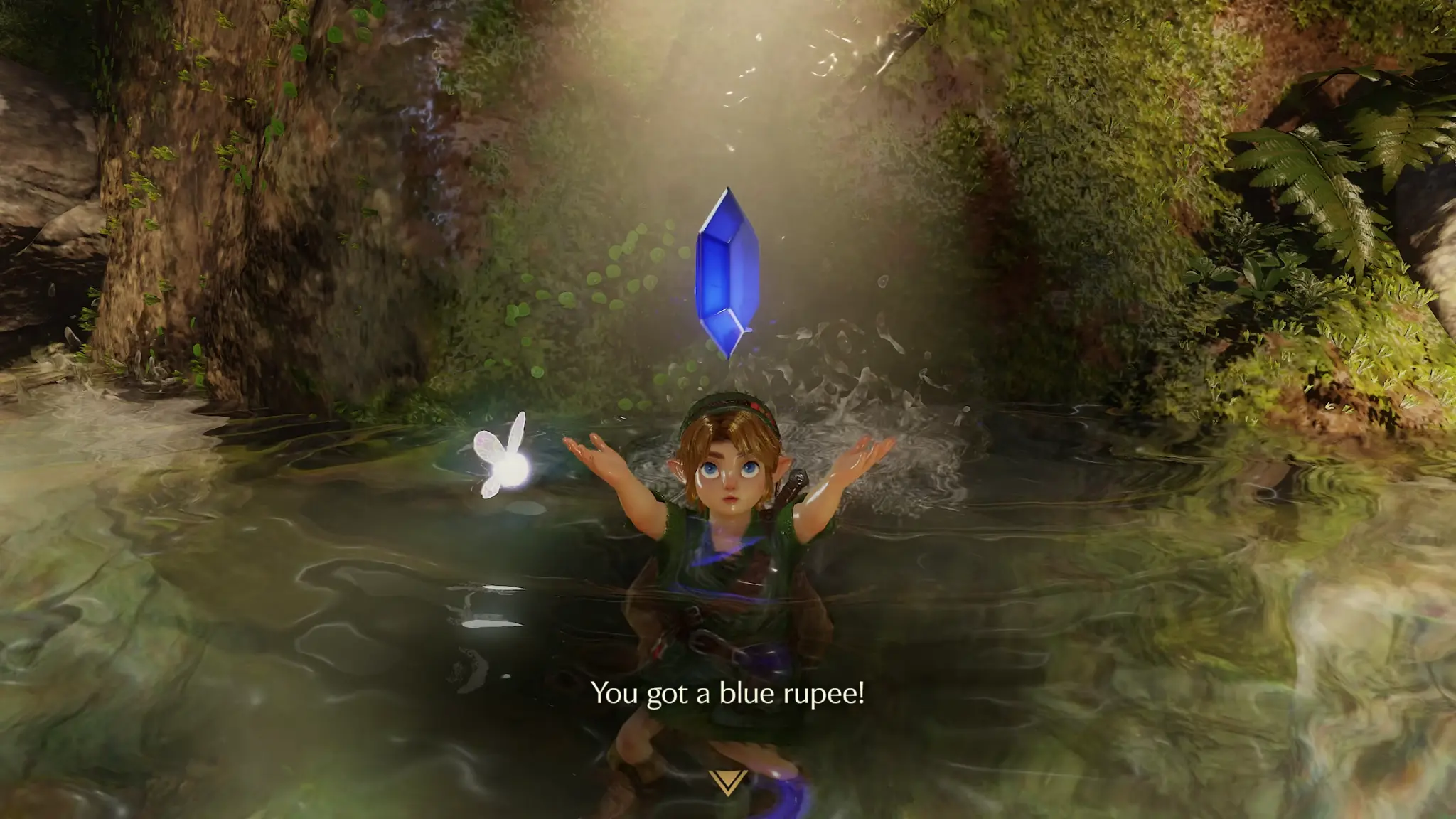
Continuing a bit further, we see the small lake within the village, where a new feature becomes evident: Link will now have a jump button, allowing him to leap to where the player is pointing the camera. When jumping into the water, we see that it is crystal clear, allowing us to see Link swimming, the bottom of the lake, the rocks, and even a blue Rupee. Upon exiting the water, his clothes appear wet. We also see an anticipated advancement: when entering one of the houses, there is no loading screen. Something that impresses, aside from the visuals, is the fixed lighting work, making the environments feel more alive and well-crafted.
An important detail displayed as the gameplay progresses is the Great Deku Tree. Upon entering it, we see that Z-Targeting is still present in the game, allowing players to lock onto enemies to facilitate combat. However, with the slingshot, it is also possible to use free aim to choose where to attack without locking on, just like in the original game. Another new feature is that the roll button now has a second function: running. By holding the button, Link can run freely through the scenery.
The city of Hyrule is bustling, nostalgic, and populated with a significantly larger number of NPCs, along with details like flowers reacting to the wind in the square. It is also noticeable that the minigames are still present. It seems there have been some changes in the distribution of buildings to enrich the scenario's construction. An interesting detail is that time passes even within the city, bringing a more dynamic day-night cycle this time, which should increase the difficulty for those aiming for 100% completion of the game.
The Biggest Innovation in the Game So Far
Finally, we have the biggest innovation presented by Eiji Aonuma: by using the controller with a microphone, we can play the ocarina by humming, singing, or even using other instruments to hit the notes of songs like "Zelda's Lullaby" (the term used on the game's own page). This functionality is exclusive to the Switch 2, an innovative idea that aims to provide players with a unique experience that only Nintendo can deliver in its games.
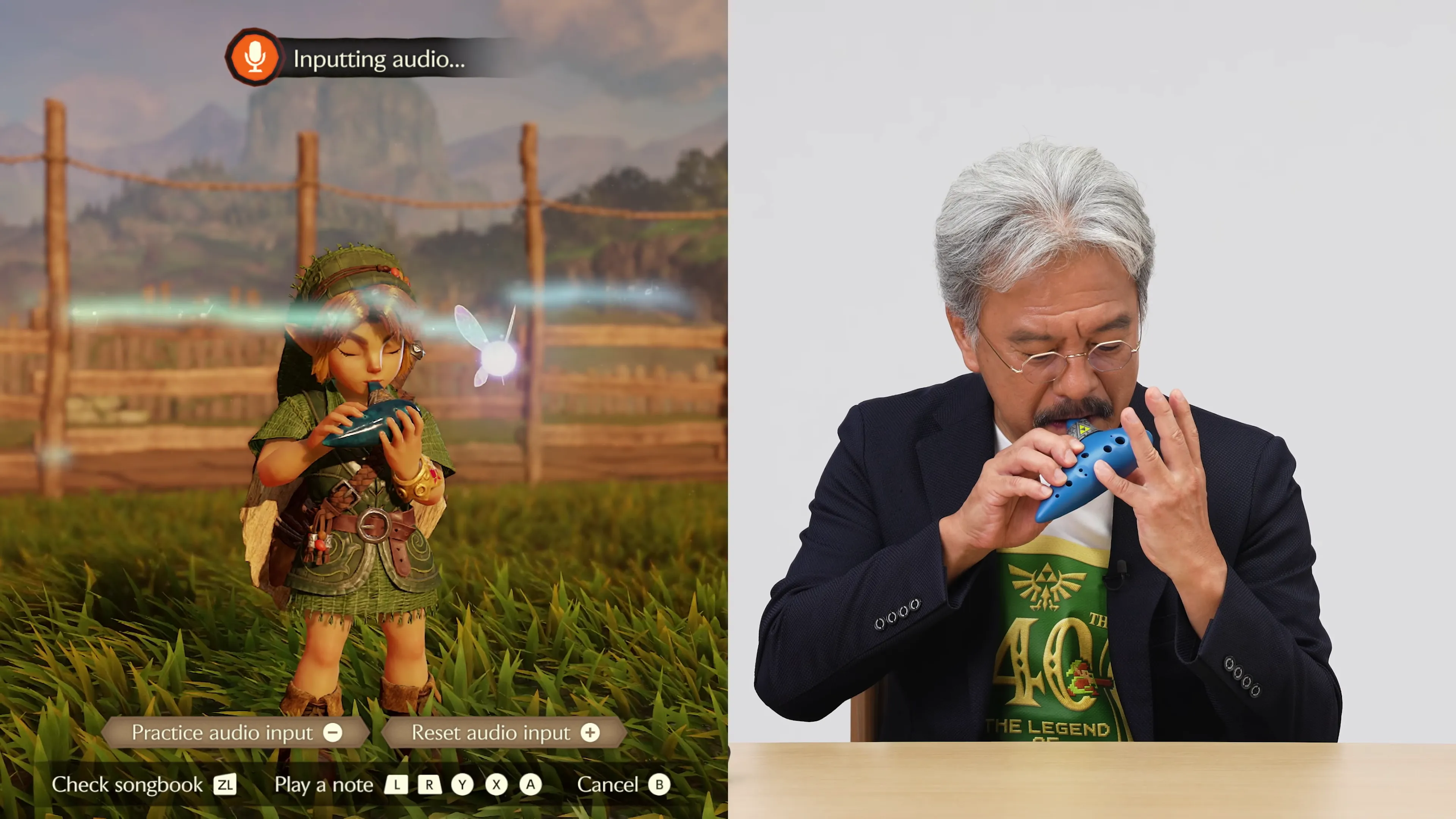
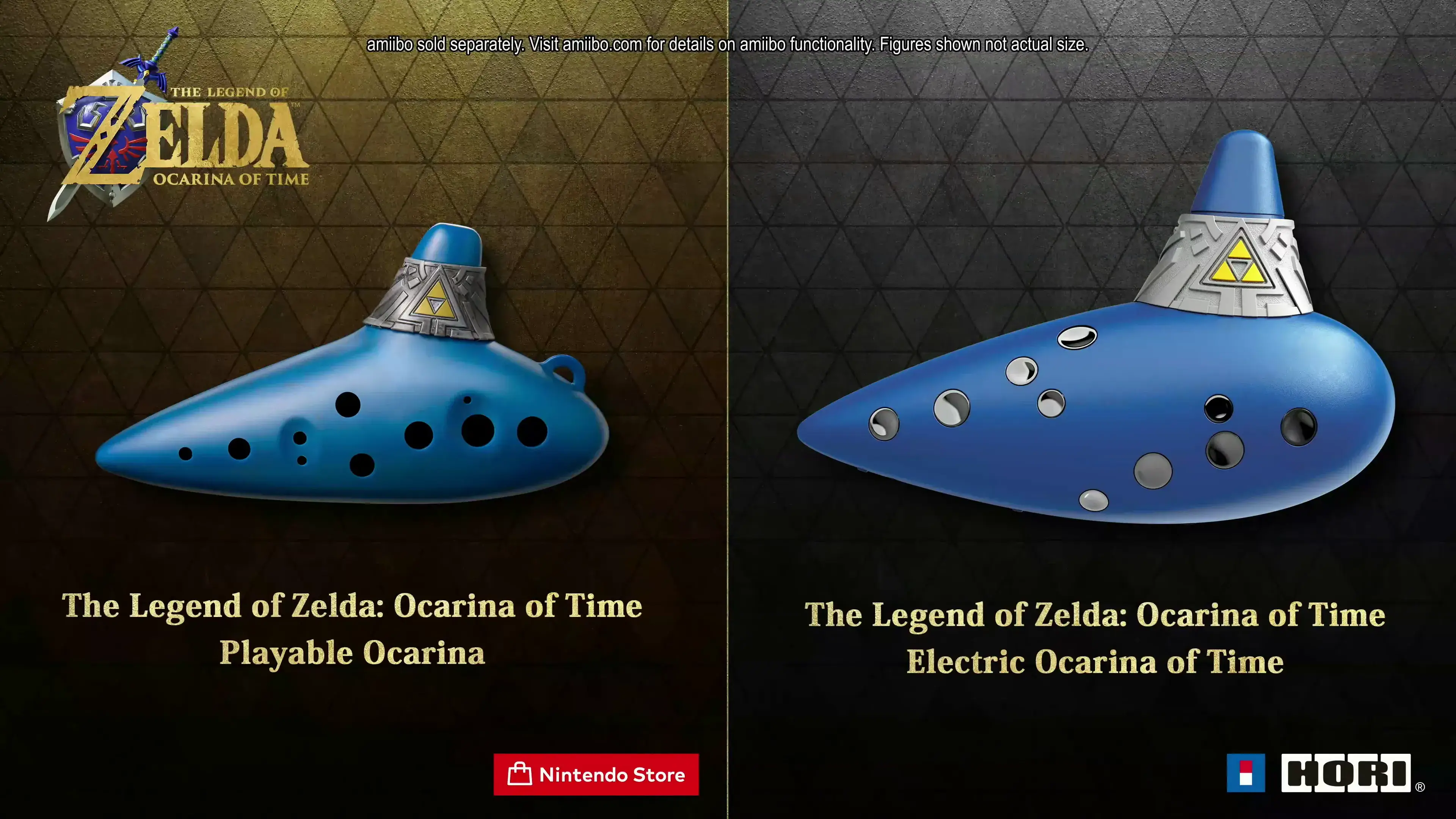
Along with this function, there was the announcement of an electronic ocarina and a regular ocarina, items that can be used to play and activate this feature in a more immersive way, allowing players to use the instrument to mimic Link's movements. This detail is made clear in the trailers, as when the character plays different songs, his fingers move exactly according to the notes that need to be executed.
The Second Trailer
While we await the release, we can catch a glimpse of a new trailer focusing on various different areas of the game, a true showcase of what awaits us, with even more beautiful areas and character visuals, ensuring a unique aesthetic for the game.
Nintendo also announced that there will be a physical media version with a metallic cover and embossing. It will certainly be a limited edition, but a coveted item for any franchise enthusiast.
The trailer begins by showing the passage of time in the background of Kakariko Village, with the windmill turning as the day gradually dawns. This beautiful view of the world is swapped for other landscapes until we encounter the recreation of the classic game's title screen: Link riding Epona:
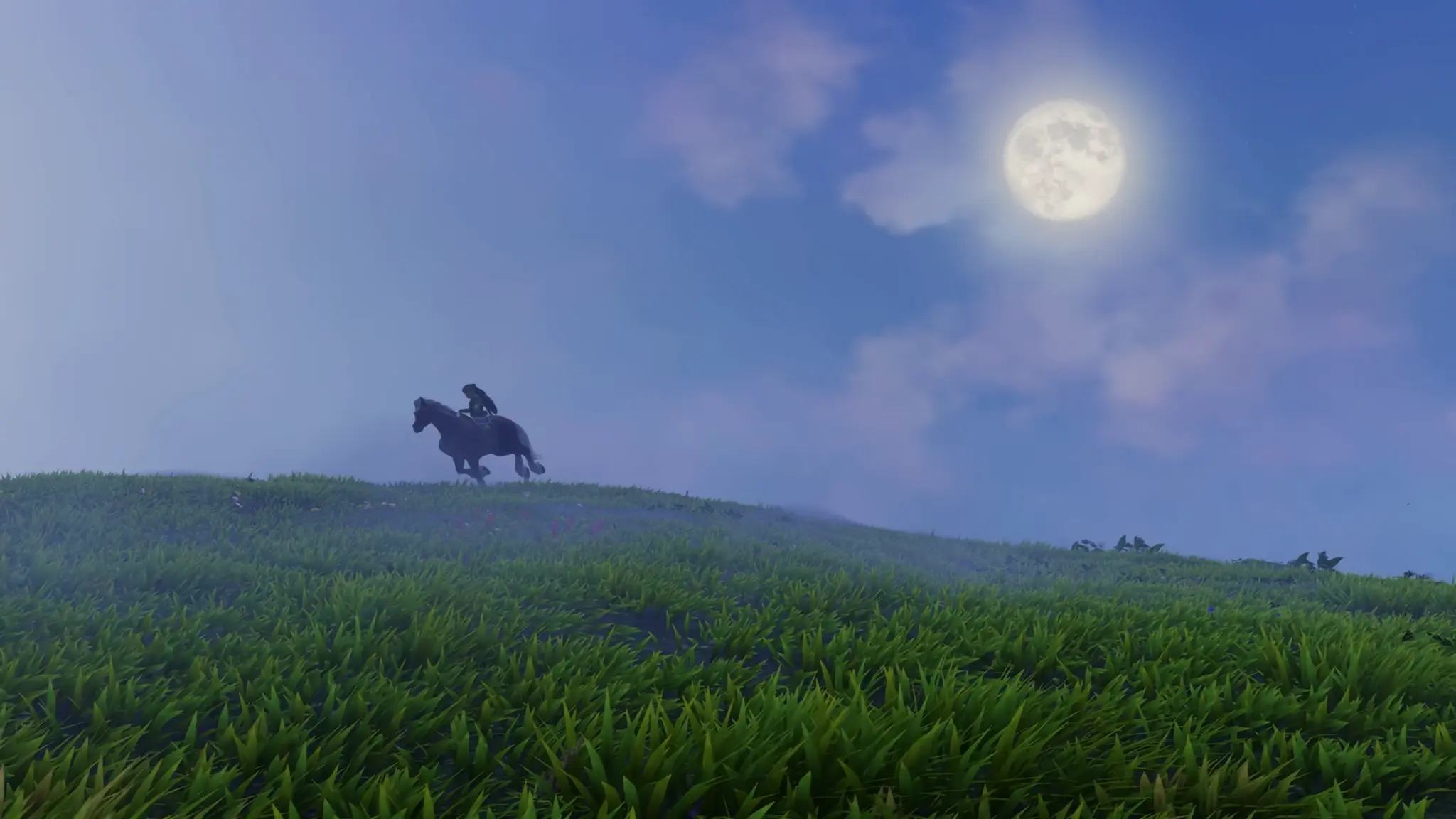
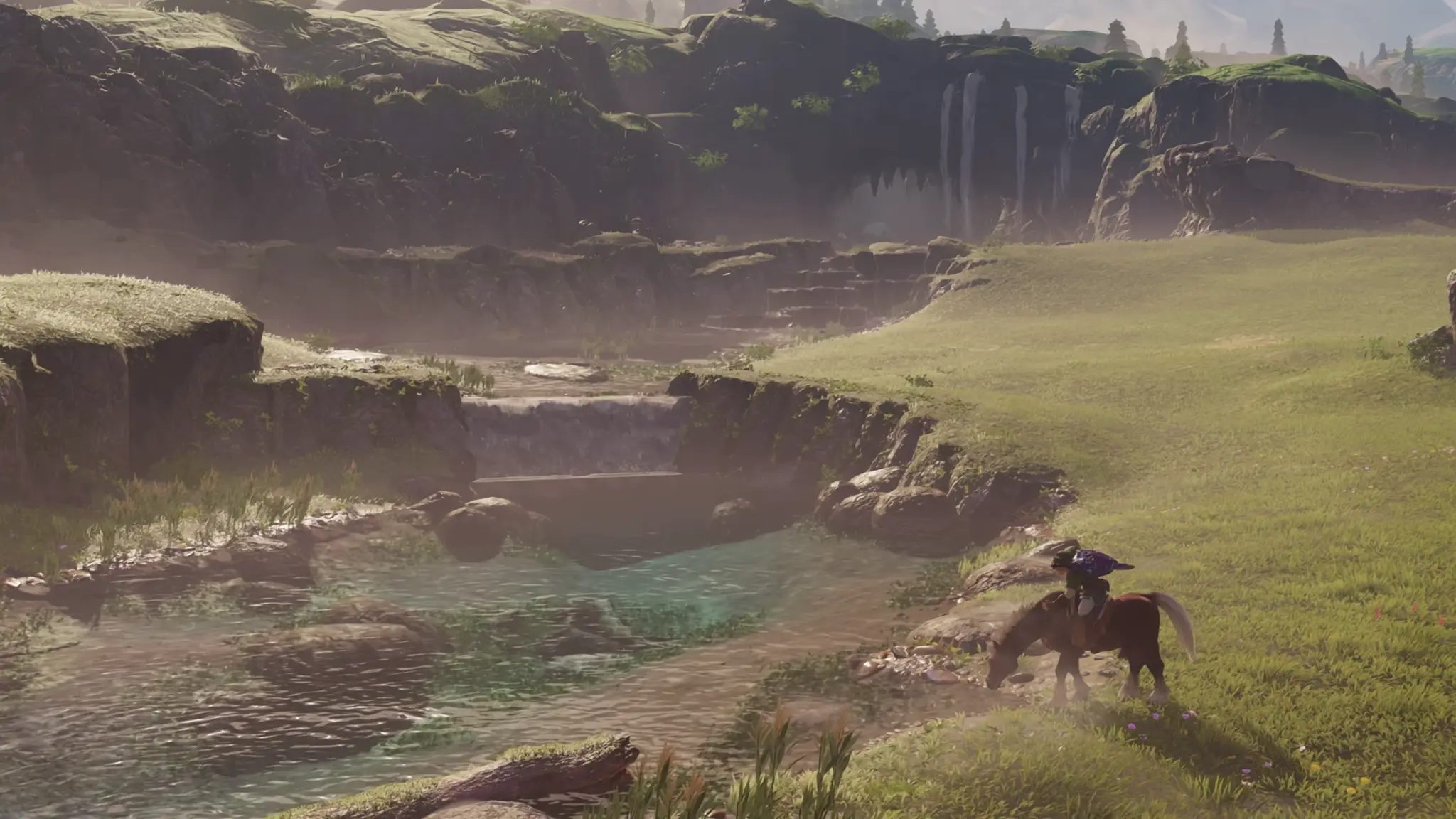
One of the most interesting images at the start is the contrast of the scene where both are standing still, with Epona drinking water while Link pets her:
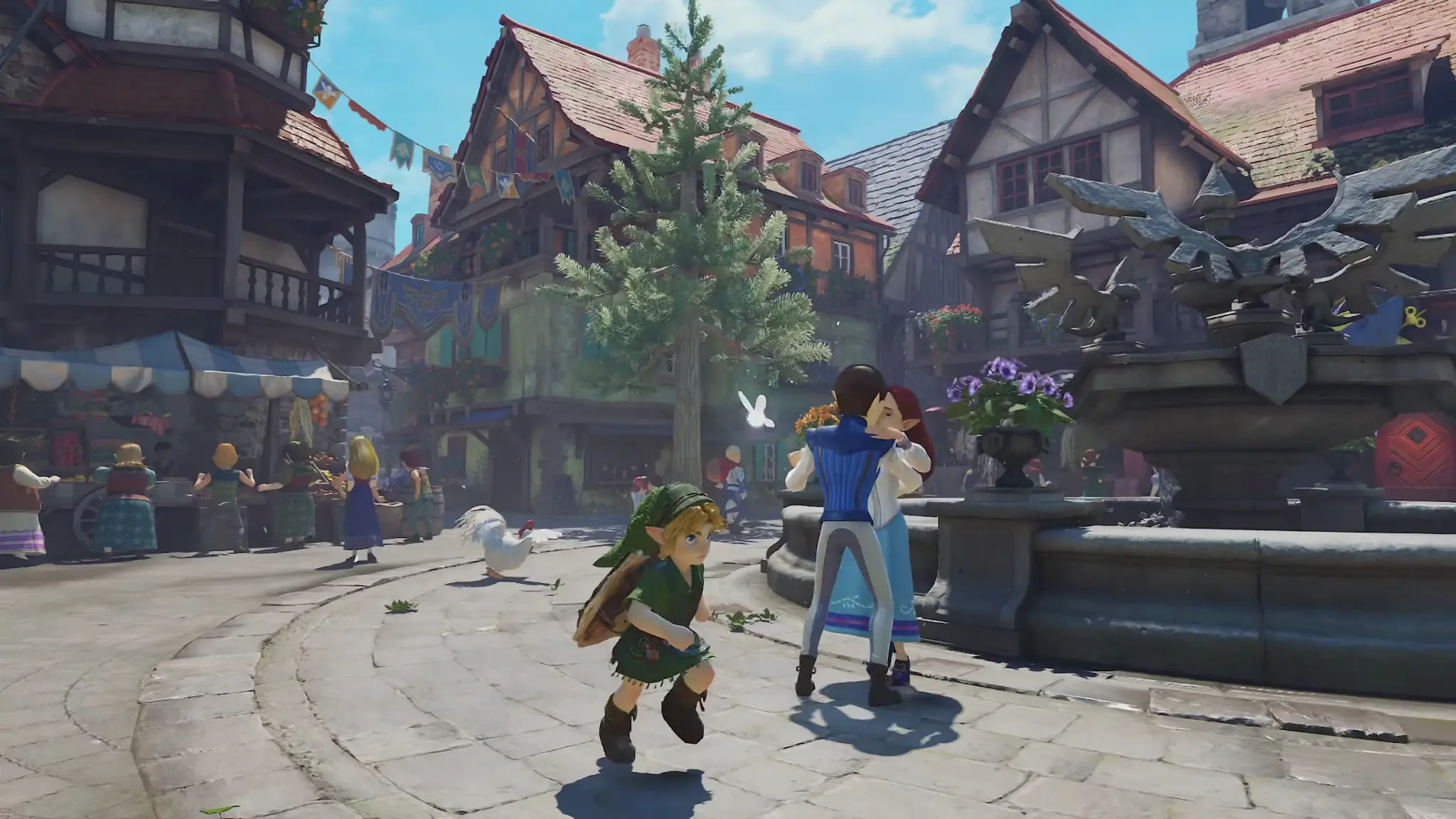
As the video continues, we see Link running through the city of Hyrule, showcasing NPCs interacting, the classic couple dancing, the Cuccos (the franchise's chickens), and the main square filled with beautiful details:
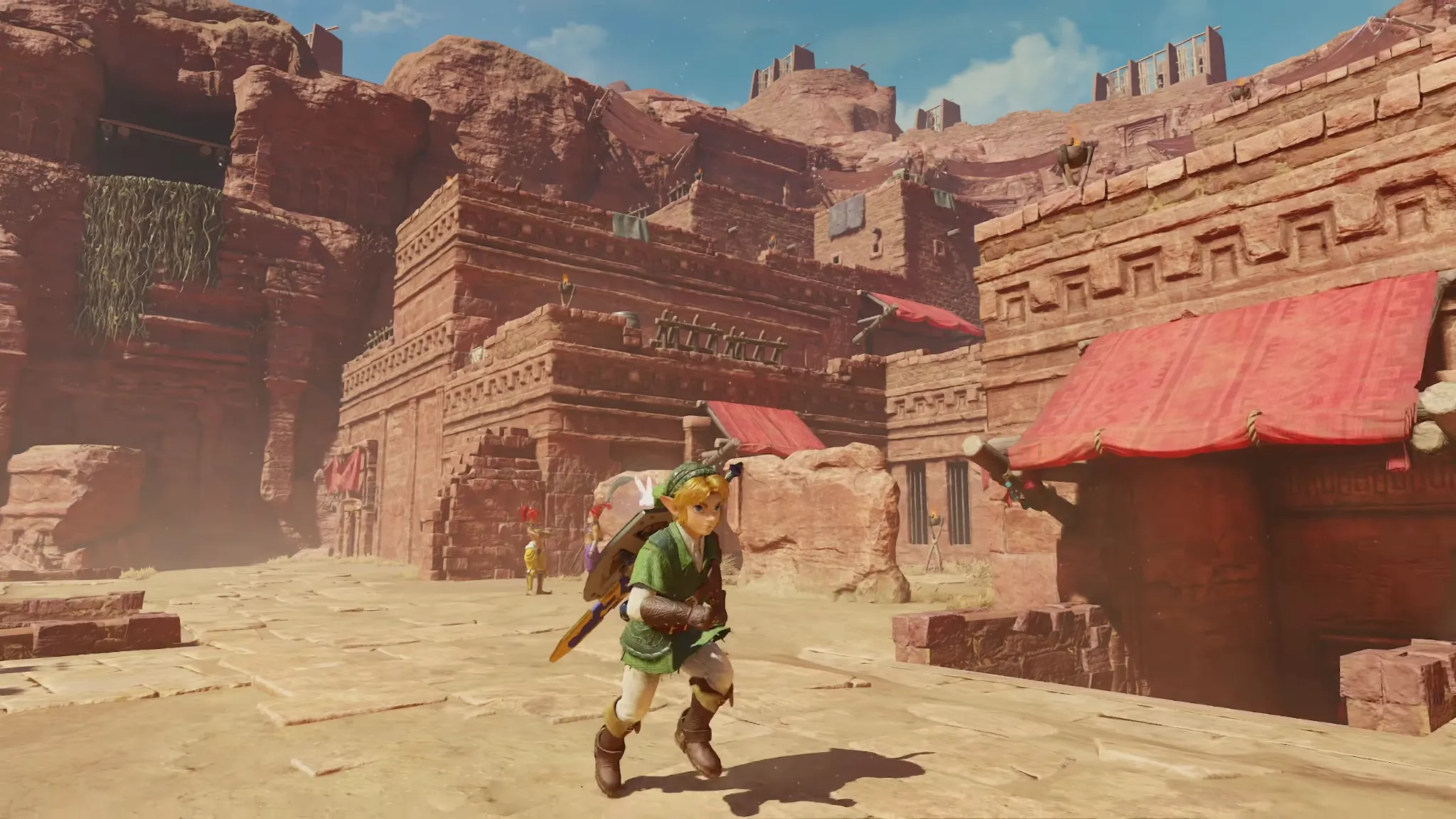
One of the most impressive visuals is the Gerudo Fortress, with its markets and carved stones stacked to form the city ruled by the Gerudos, figures that always demonstrate great strength and intelligence in the saga.
In this same sequence, we see the adult Link up close for the first time, noticing the difference in height and a more mature face without losing his main features, displaying the determination of someone who knows his duty:
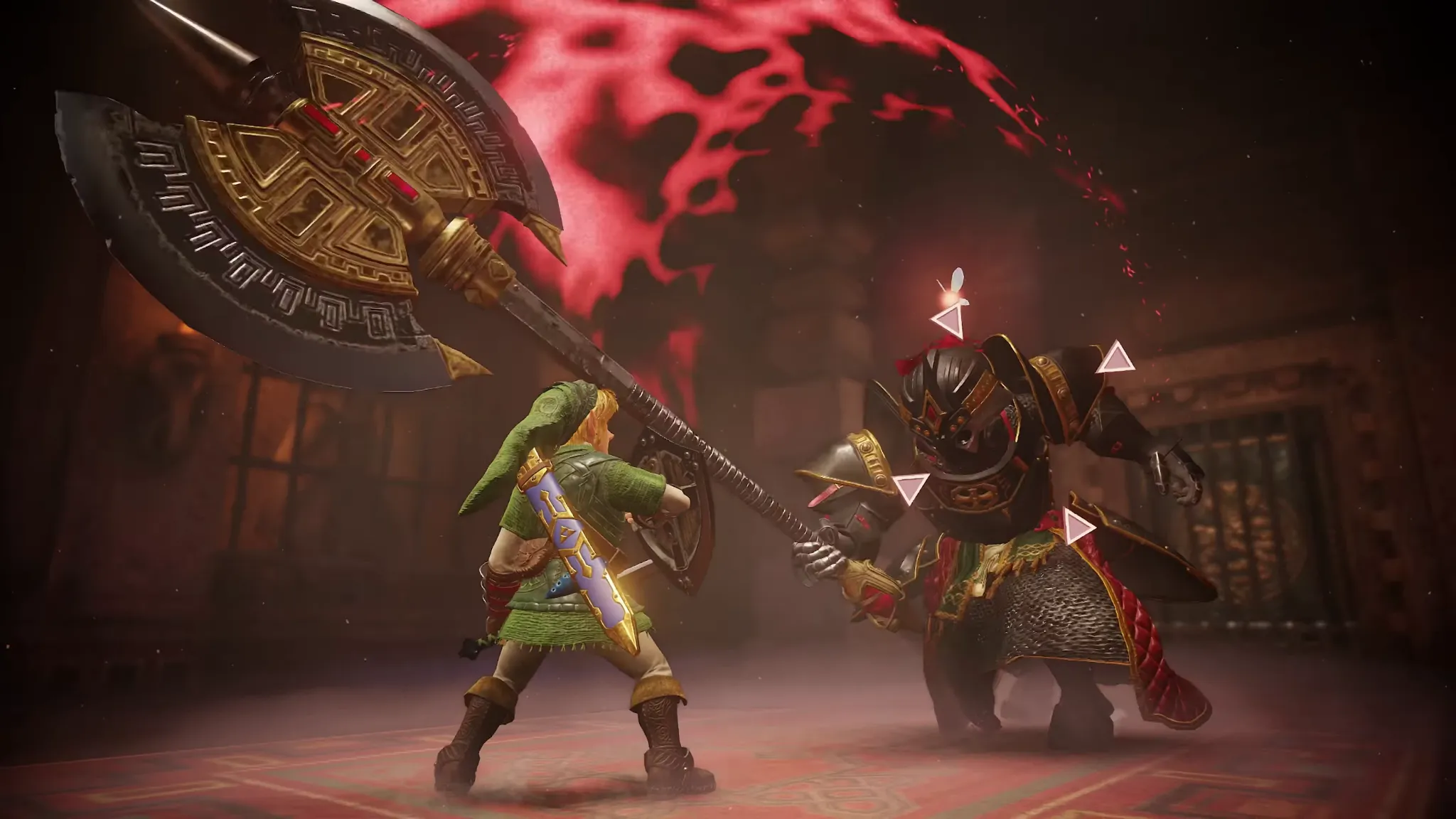
In one of the scenes, adult Link fights against a huge enemy, showing that he will still have to face much larger and more intimidating threats than himself, and not just Ganondorf:
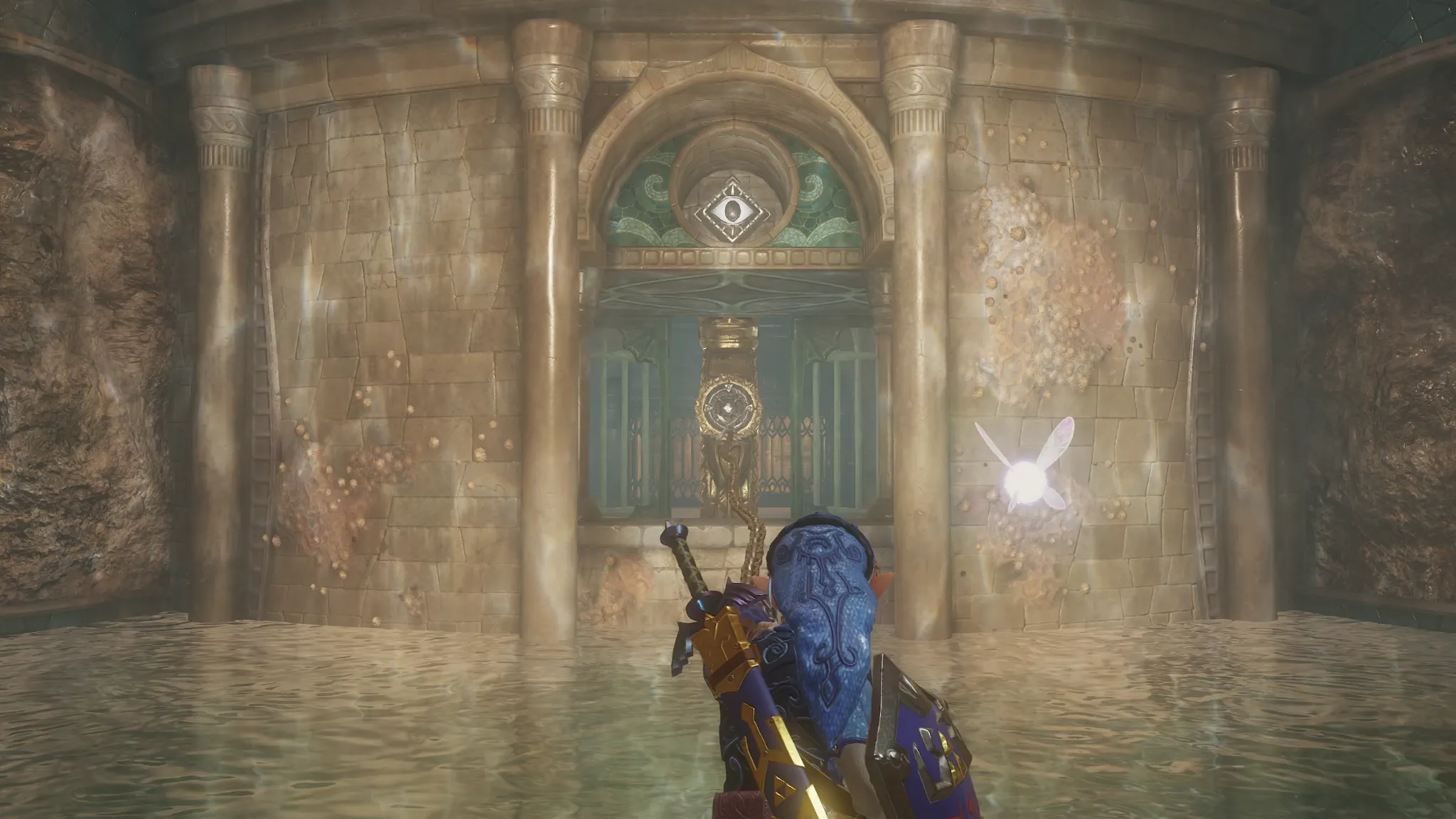
In another segment, it is possible to observe in detail the tunic used in the Water Temple. The garment features scale textures throughout, proving that each outfit will have striking particularities, just like the Kokiri green tunic. Additionally, the temple walls display intricate details reminiscent of crustaceans:
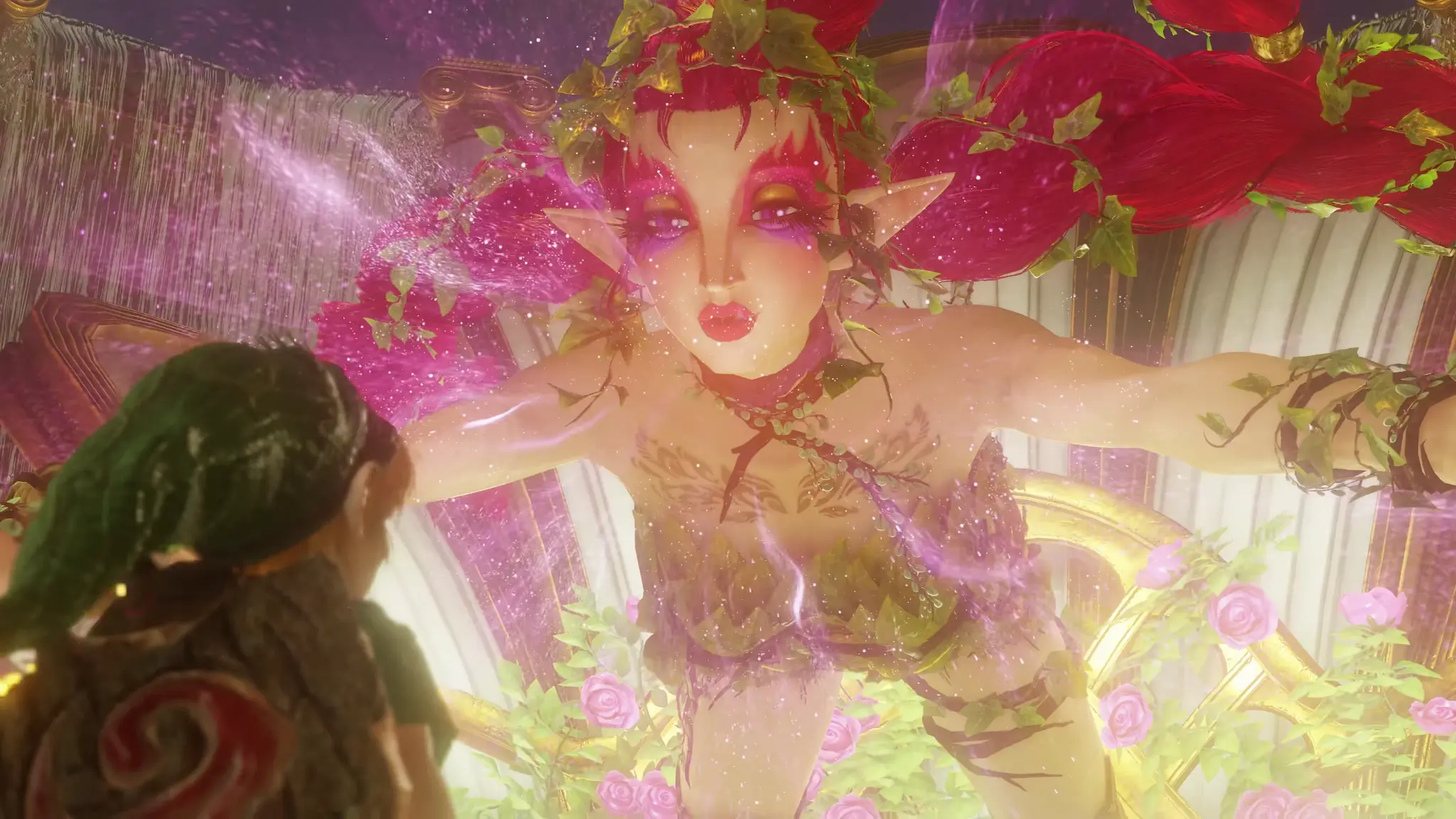
The trailer also confirms the fishing minigame, the mechanic of holding Cuccos to achieve longer jumps, a glimpse of Malon with Lon Lon Ranch, and, above all, the grandeur of one of the Great Fairies. The visuals in some images vaguely resemble the original screen, showing players a possible start screen we will have in the game, featuring the landscape, Epona, and Link riding around Lon Lon Ranch.
A Glimpse of the Characters
The video enters a moment focused on the iconic characters of the story, starting with Sheik, with a fundamental detail: the trailer is in Brazilian Portuguese, confirming that the game will be dubbed:
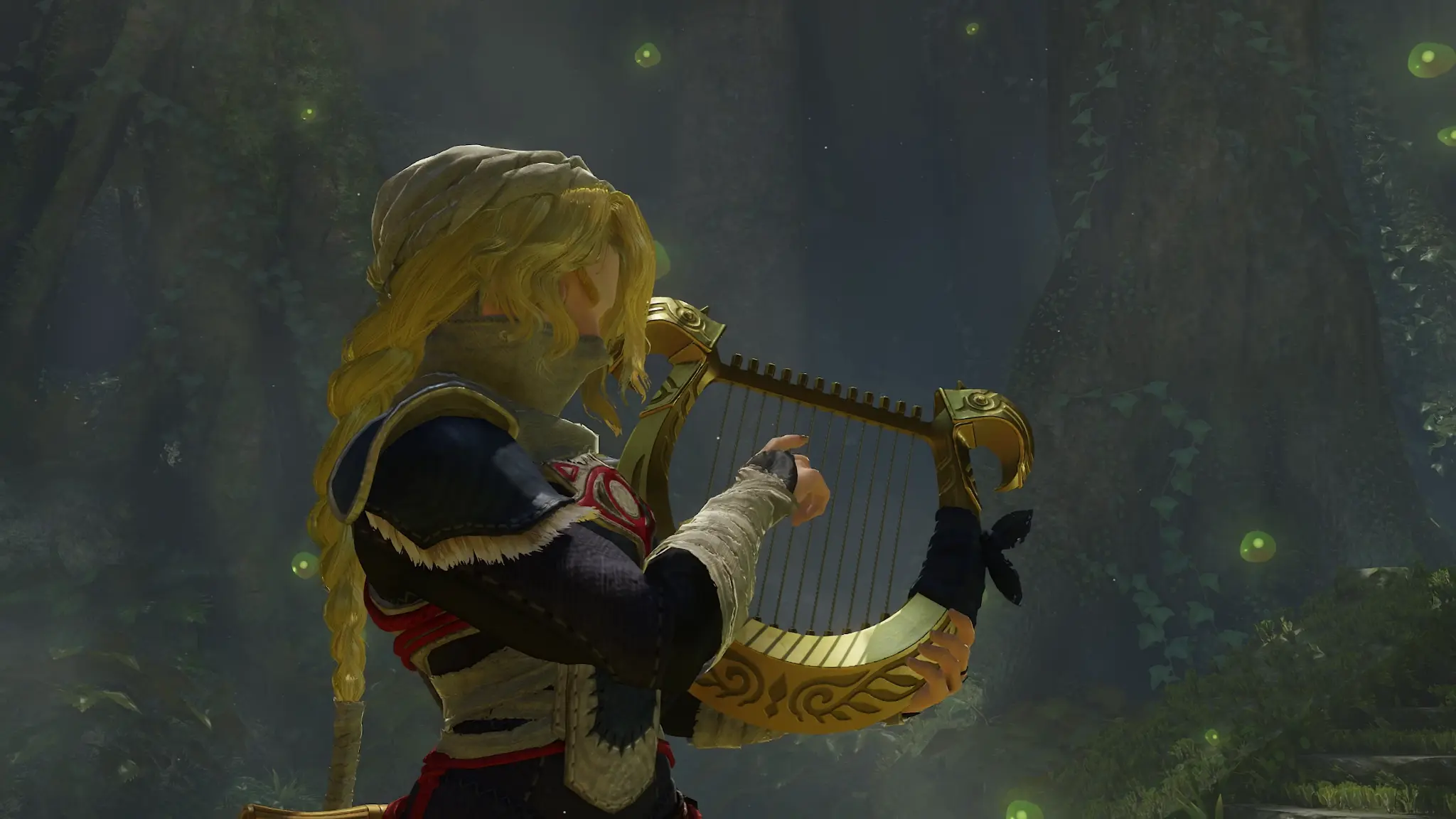
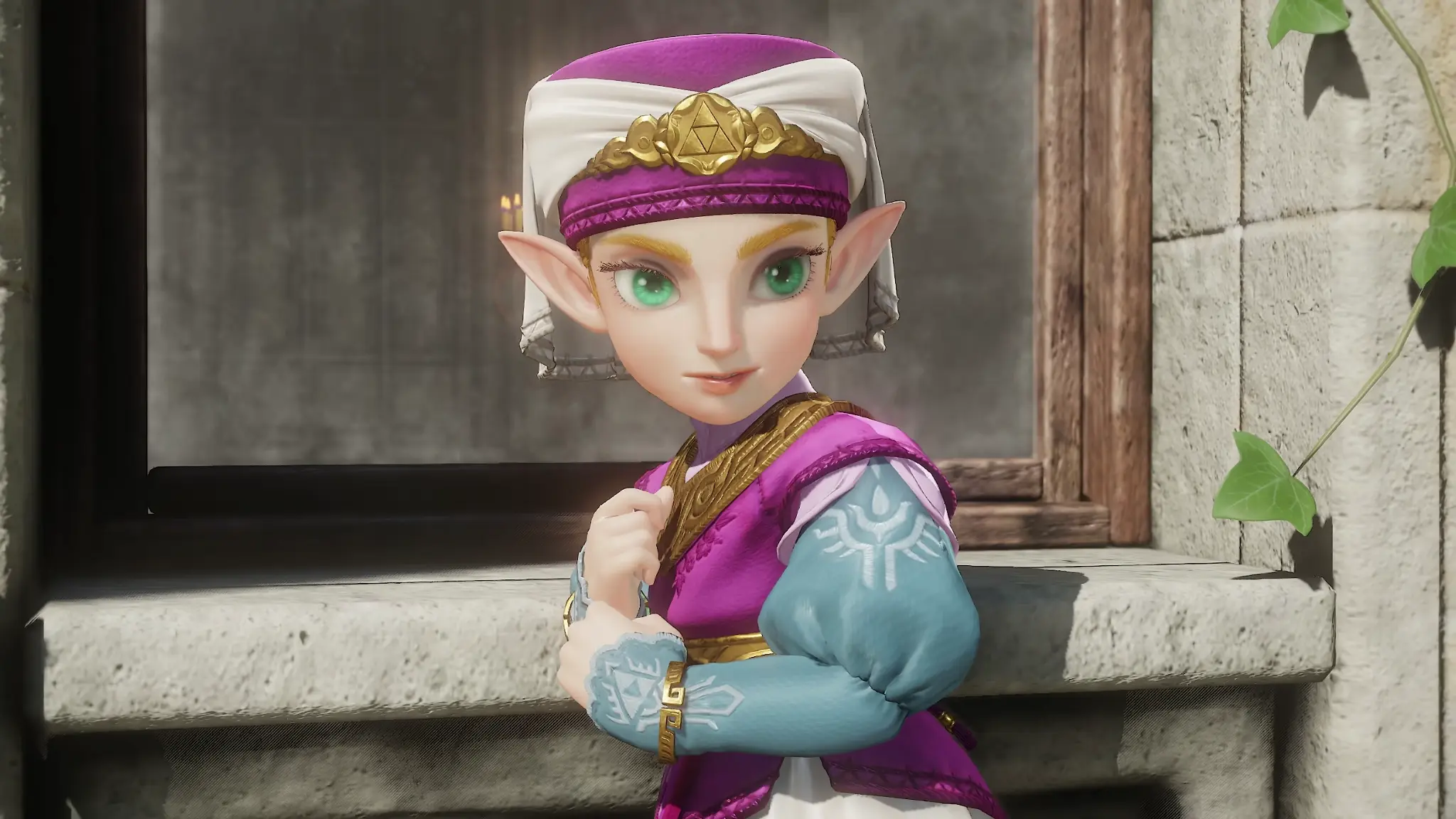
Among the already confirmed names, we have the voice actress Bianca Lua, who will voice our beloved Zelda and also Sheik, finally bringing our favorite princess to life in our language, with the talent of our voice actress making the story even more emotional:
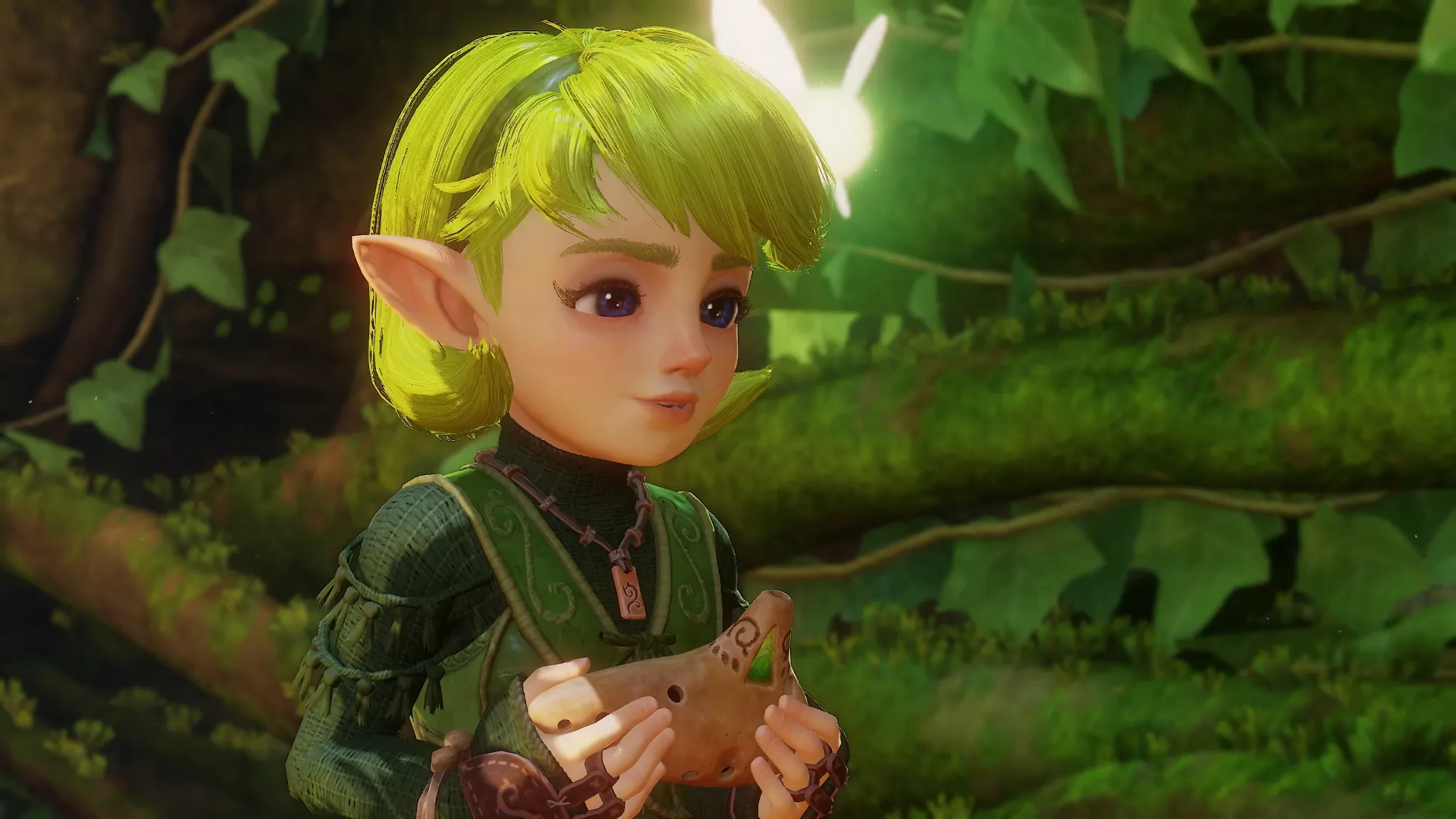
Voicing the Kokiri and Link's best friend on our journey, Saria, we have Sicilia Vidal, making everything more bearable as we interact with her through Navi, who will be voiced by Flávia Narciso:
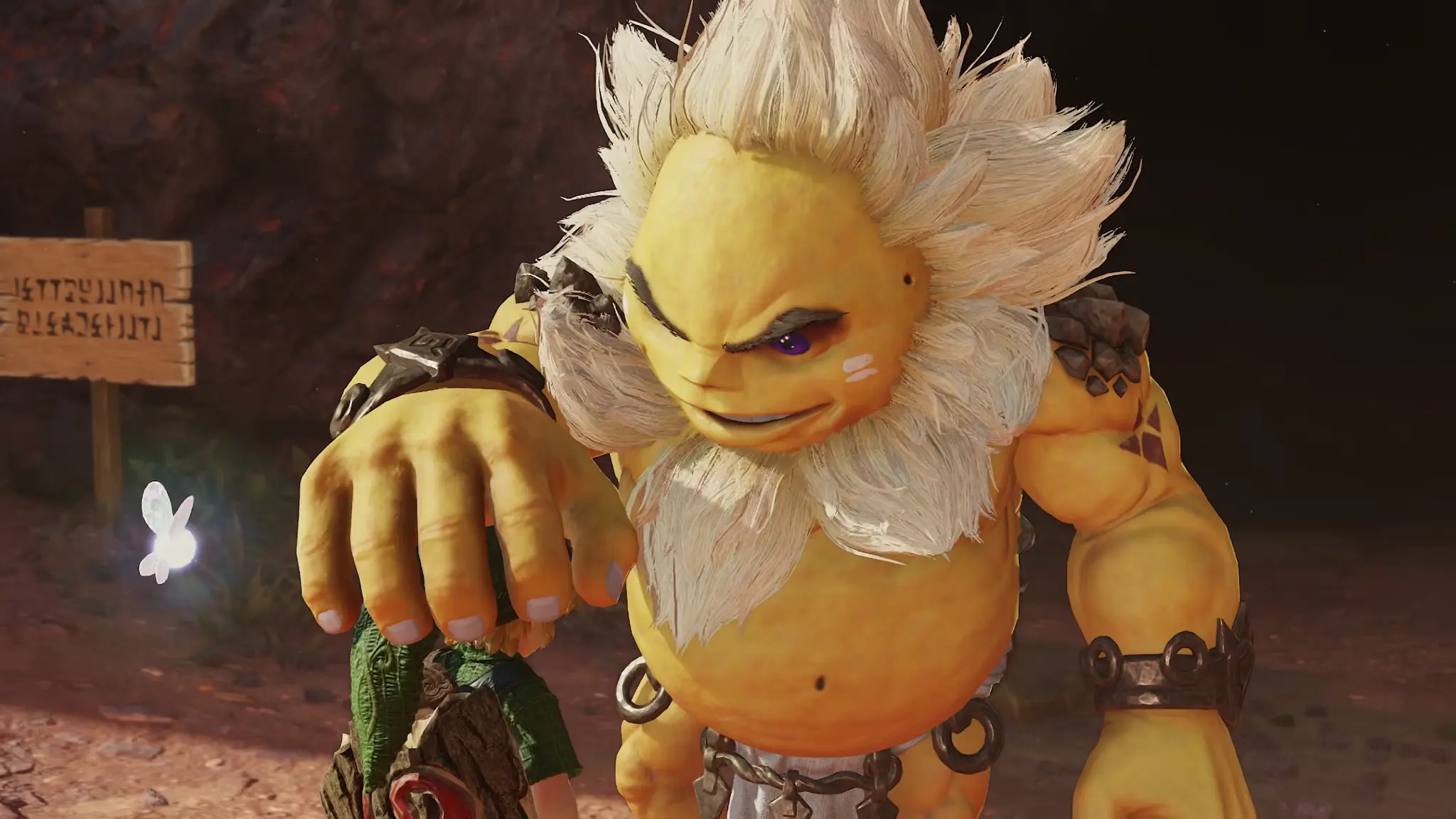
The great and funny Darunia will be voiced by Júnior Nannetti, a powerful and strong voice to match our Rock Brother:
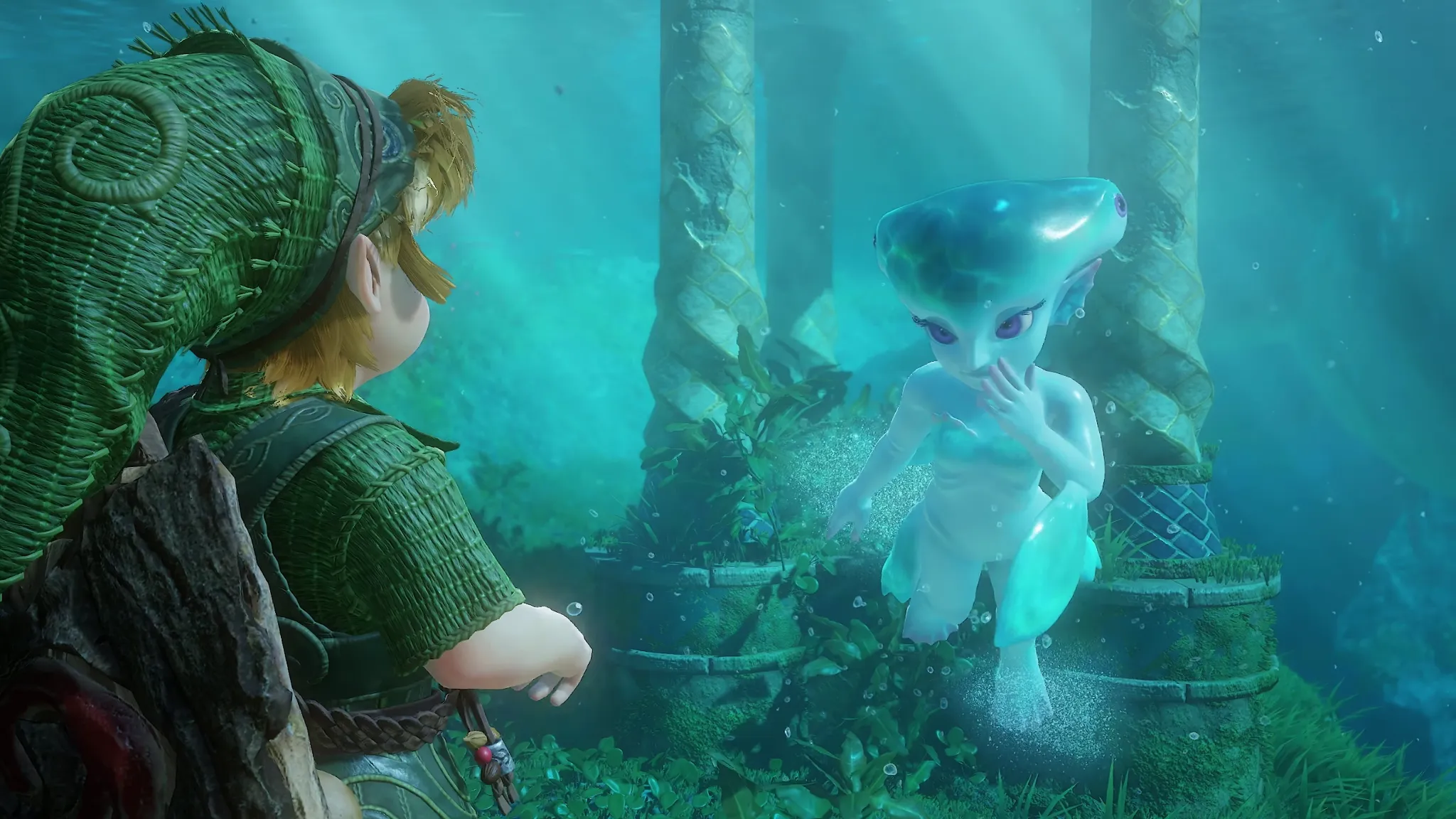
Wrapping up the list of our important companions about whom we have information and who were shown in the trailer, we have Mayara Stefane, who will voice our Zora princess, Ruto, with a friendly and gentle tone:
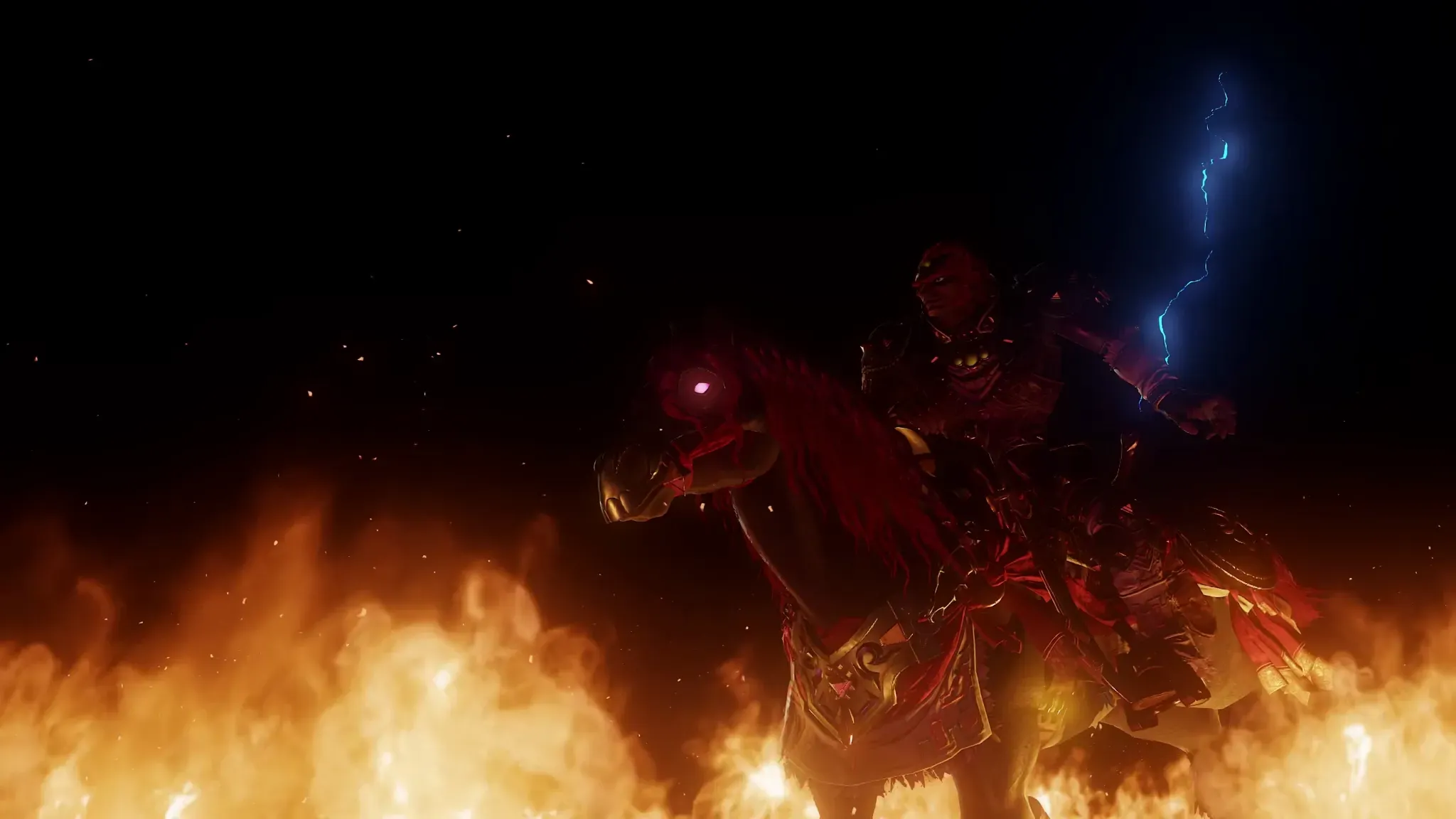
Finally, the game's villain, the leader of the Gerudo tribe, Ganondorf, will have an intense and imposing voice, something that is sure to instill fear: we will have the voice of Fábio Azevedo:
The New Visual
Undoubtedly, one of the most impressive details of the trailer is the game's visual represented in such a unique way: the beauty of the world contrasts with Link and his face, which subtly changes throughout the journey. At first glance, we might be reminded of older animations, such as "The Dark Crystal," a film directed by Jim Henson and Frank Oz that utilized puppets and marionettes recorded in real-time. The work has an intense and dark atmosphere, seeking a serious tone while conveying the story more concretely.
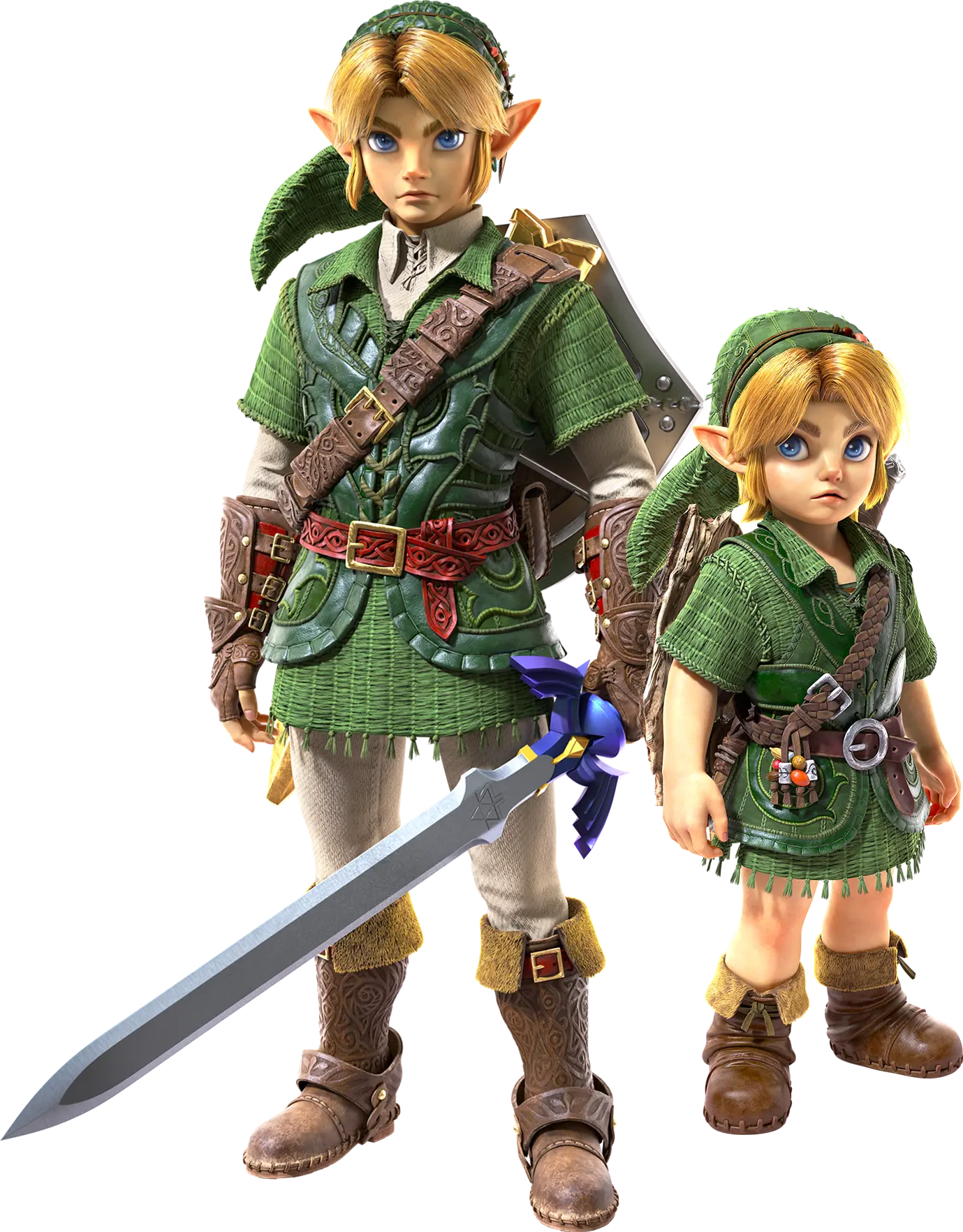
However, the visual innovation and the combination of the dark style with something more playful come much closer to Japanese puppet theater, one of Shigeru Miyamoto's great passions. This taste was revealed by Takaya Imamura, former art director at Nintendo, who suggested that the game's visual style might have been inspired by these puppets. This influence also shines through in the world-building, such as in the scene of the tapestry being woven as the game progresses, revealing more of the plot.
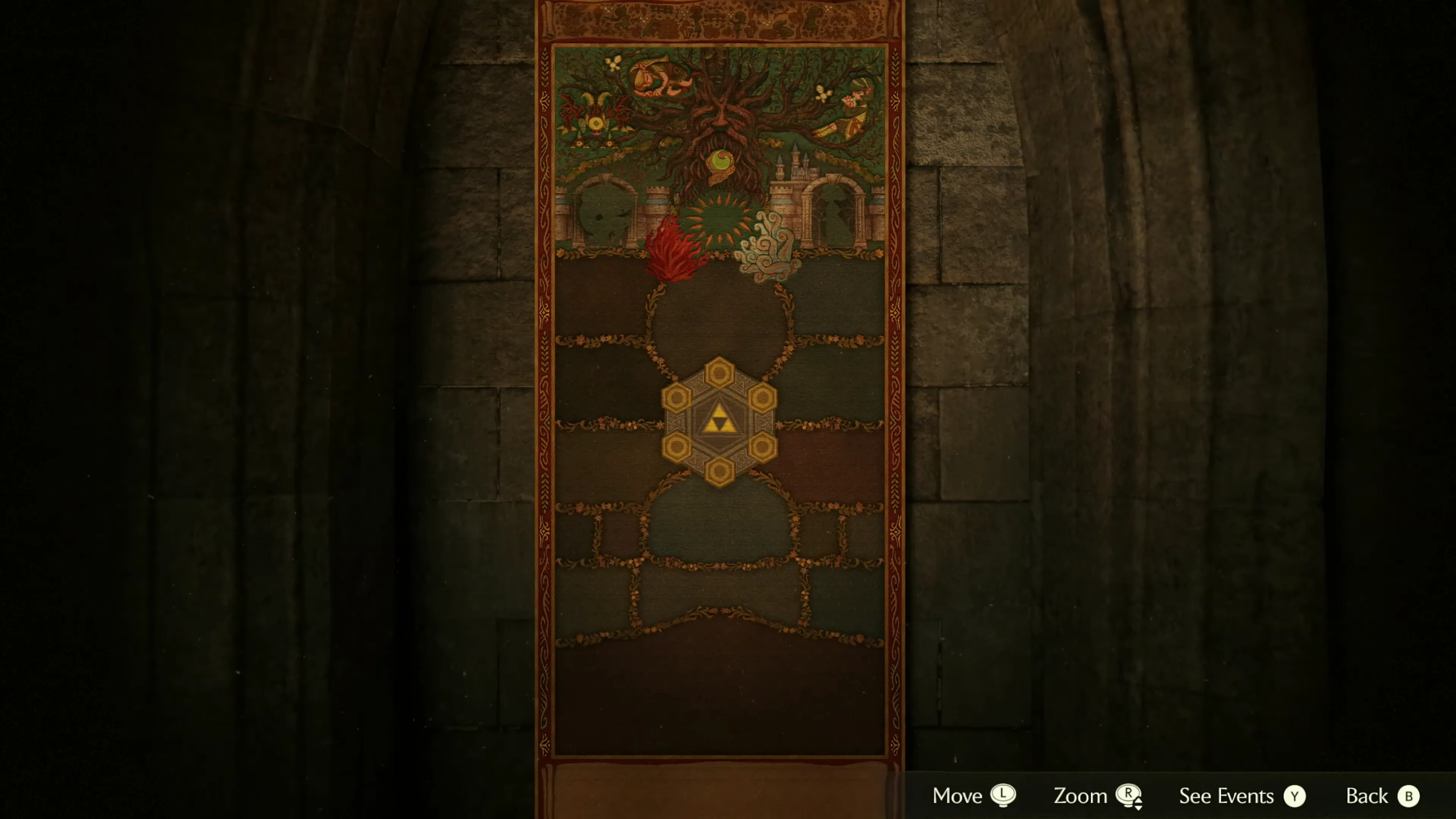
Who knows, perhaps the art direction was designed precisely to give players the feeling of experiencing a puppet theater telling the story of the Hero of Time in another moment in the history of the kingdom of Hyrule? We will have to wait for the final result on November 5, 2027.
The content shown by Nintendo will still be extensively analyzed by the Sheikah Community, so we can bring you much more news. We appreciate your support and hope you look forward to our upcoming posts!